
External Affairs Minister S Jaishankar has informed a parliamentary panel that Pakistan was notified about Indian strikes on terror camps in their territory only after they were carried out. He also clarified that the decision to halt the military operation was taken bilaterally following a request from Pakistan, and there was no US mediation involved. Jaishankar emphasized India's zero-tolerance policy against terrorism and the importance of conveying a united message against it globally.
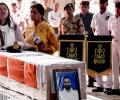
The family of Navy officer Vinay Narwal, killed in a terror attack in Pahalgam, expressed gratitude for "Operation Sindoor", the Indian military's retaliatory strikes against terror infrastructure in Pakistan and PoK. Vinay's wife, Himanshi, who was widowed during their honeymoon, called the operation a testament to her late husband's spirit and a strong message against terrorism. Vinay's father, Rajesh, said the strikes would make terrorists think twice before carrying out such attacks. The operation was lauded for its decisive response to the Pahalgam attack, which claimed the lives of 26 tourists.

The National Investigation Agency (NIA) has started interviewing eyewitnesses, including tourists, in connection with the deadly terrorist attack in Pahalgam, south Kashmir. The attack, carried out by terrorists from the Pakistan-based Lashkar-e-Taiba (LeT), claimed the lives of 26 people on April 22. Initial investigations suggest that five to seven terrorists were involved, aided by local militants trained in Pakistan. Security forces are conducting massive operations to hunt down the terrorists in the dense jungles of the Pir Panjal range.
'We want to ensure that no government in J&K will be formed without our support.'

During Operation Sindoor, Indian naval ships, submarines and aircraft were operationally ready and deployed, projecting strength and preparedness to deter any "potential actions from our western adversary" in the maritime domain, Navy chief Admiral Dinesh K Tripathi said on Friday.

Army Chief General Upendra Dwivedi asserted that Operation Sindoor was unlike any conventional mission and that it was akin to playing a game of chess as 'we did not know' what would be the enemy's next move.
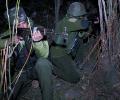
For the ninth consecutive night, Indian and Pakistani troops engaged in small arms fire along the Line of Control (LoC) in Jammu and Kashmir, continuing a pattern of heightened border tensions. The skirmishes, initiated by Pakistani troops in violation of the ceasefire agreement, have led to a tense situation along the LoC and International Border (IB). The incidents come in the wake of the April 22 terror attack in Pahalgam, which claimed the lives of 26 people, mostly tourists. Civilians residing near the border have begun preparing their bunkers, anticipating potential escalation. Despite a recent hotline conversation between the Directors General of Military Operations (DGMOs) of India and Pakistan, where India cautioned Pakistan, the ceasefire violations persist.

A month after a deadly terror attack on tourists in Pahalgam, locals in the south Kashmir resort town are facing mounting livelihood losses. Despite a massive crackdown by security forces, the perpetrators of the attack have evaded capture. Tourists have stopped visiting Pahalgam, leaving businesses struggling to survive. Local residents say the situation is becoming desperate and call for government intervention to help revive the tourism industry.

Pakistan Prime Minister Shehbaz Sharif has called on "brotherly" countries, including Saudi Arabia, to urge India to de-escalate tensions after the Pahalgam terror attack that killed 26 people. Sharif met with ambassadors from Saudi Arabia, the UAE, and Kuwait, reiterating Pakistan's commitment to peace in South Asia. He rejected India's accusations linking Pakistan to the attack, emphasizing Pakistan's own history as a victim of terrorism. The meeting comes amidst heightened tensions between the two countries.

Addressing a massive Martyrs' Day rally in Kolkata, Banerjee gave a clarion call to defeat the Bharatiya Janata Party in the 2026 assembly elections and eventually oust it from power at the Centre, declaring, "If this linguistic profiling doesn't stop, our resistance movement will reach New Delhi."

Ashanya, the widow of Shubham Dwivedi, who was killed in the April 22 terror attack in Pahalgam, Jammu and Kashmir, has demanded that her husband be accorded the status of a martyr. She said no effective action has been taken against the perpetrators of the attack, which claimed the lives of 26 people. Ashanya met with Congress leader Rahul Gandhi, who assured her he would write to Prime Minister Narendra Modi requesting martyr status for Shubham.
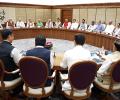
The diplomatic exercise aimed at presenting India's stance against Pakistan on terror comes in the wake of Operation Sindoor -- the Indian offensive against terror camps in Pakistan and Pakistan-occupied Kashmir following the April 22 terror attack in Pahalgam in which 26 people, mostly tourists, were killed.
He went on to say that even though this has not been discussed, he is going to 'increase trade substantially with both of these great Nations.'
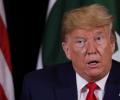
Pakistan's Ambassador to the US, Rizwan Saeed Sheikh, has urged President Donald Trump to help ease tensions with India, highlighting the Kashmir issue as a "flash point" in nuclear terms. He believes that the US should take a more comprehensive and sustained approach to address the situation rather than just immediate de-escalatory measures.

Union Home Minister Amit Shah on Thursday vowed to hunt down each and every terrorist involved in the Pahalgam attack and said all of them will be made answerable for the heinous act.

President Droupadi Murmu's address to the nation on the eve of the 79th Independence Day.
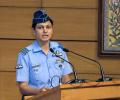
Wing Commander Vyomika Singh, an accomplished helicopter pilot in the Indian Air Force, was chosen to brief the nation about India's 'Operation Sindoor' strikes on Pakistan. She has flown a variety of aircraft and taken part in rescue operations in extreme conditions. Vyomika, who has logged over 2,500 flying hours, has operated helicopters across challenging terrains, from the high-altitude sectors in Jammu and Kashmir to the remote areas in the Northeast. She led a rescue operation in Arunachal Pradesh in 2020, flying in extreme conditions to evacuate civilians.

The address comes two days after India and Pakistan reached an understanding to stop all firing and military actions on land, air and sea with immediate effect.
11, 13, 15 are not some random odd numbers but the number of days that Prime Minister Narendra Modi took to act against Pakistani terror strikes on Indian soil.

The Jammu and Kashmir administration on Saturday sacked six government employees, including five policemen, for their 'deep involvement in anti-national activities', officials said.

The Indus Waters Treaty, brokered by the World Bank, has governed the use of the Indus River and its tributaries between India and Pakistan since 1960.
Indian Air Force S-400 Sudarshan Chakra air defence missile systems were fired last night against targets moving towards India. The targets were successfully neutralised in the operation multiple domain experts told ANI.

The Supreme Court on Thursday refused to examine a public interest litigation (PIL) seeking a judicial probe into the April 22 Pahalgam terror attack in which 26 people were killed.

John Spencer, the chair of Urban Warfare Studies at US-based think-tank Modern War Institute, said India showcased its ability to strike any target in Pakistan "at will" and drew and enforced a "new red line" for cross-border terrorism under the operation that was launched early on May 7.

haroor said the visit's main purpose was to share what India has endured and seek solidarity in the fight against terrorism.

India has carried out strikes against nine terrorist infrastructure in Pakistan and Pakistan-occupied Kashmir, Defence Minister Rajnath Singh said on Wednesday. The strikes were in retaliation to the Pahalgam terror attack in which 26 civilians were killed. Singh said the strikes were precise and destroyed the targets set under Operation Sindoor.

A couple from Maharashtra narrowly escaped a terror attack in Pahalgam, Kashmir, after leaving the site just minutes before the incident. They praised the local people for their quick assistance in helping them reach safety.
'The devastating Indian Air Force strikes on the night of May 9-10 exposed Pakistan's vulnerabilities.' 'If these had continued, it would have further degraded Pakistan's ability to continue with air operations.'
Pakistan claims it was a mosque and an educational complex that were hit in the strikes at Muridke, located at about 40 km from Lahore.

Pakistani wives of former militants rehabilitated in Kashmir have pleaded with the government to allow them to stay, stating they would rather die than return to their native country. The women, who came to Kashmir under a 2010 rehabilitation policy for former militants, have been asked to leave by the police. They say they have built lives in Kashmir and fear for the future of their children if they are forced to return.

The worst-hit in the Pakistani shelling was Poonch district which accounted for all the civilian deaths, the officials said, adding 28 persons were also injured and the condition of some of them was stated to be critical.
Pakistan was waiting for an opportunity to bring the Jammu and Kashmir issue to the global agenda and resorted to the terrorism route to provoke India, observes Ambassador T P Sreenivasan.

Two residents of Pune, Kaustubh Ganbote and Santosh Jagdale, were killed in a terror attack in Pahalgam, Kashmir, on Tuesday. Ganbote, a snacks business owner, and Jagdale, an interior designer, were on a family vacation with their wives and children when the attack occurred. The attack has left both families devastated. Ganbote was known for his jovial and helpful nature and had recently become a grandfather. Jagdale was also known for his love of travel and music. The bodies of both men were brought back to Pune on Thursday, where they were received by Union Minister of State for Civil Aviation Murlidhar Mohol.
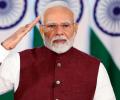
Operation Sindoor has carved out a new benchmark in our fight against terrorism, and has set up a new parameter and new normal. Operation Sindoor is not just a name but a reflection of the emotions of millions of Indians. Operation Sindoor is an unwavering pledge for justice. Terrorists dared to wipe 'sindoor' from the foreheads of our sisters; that is why India destroyed the very headquarters of terror.
Pakistan's Deputy Prime Minister and Foreign Minister Ishaq Dar has warned India of a strong response, saying Pakistan will respond to a "brick with a stone" if India takes any action against Pakistan, amid heightened tensions following the April 22 terror attack in Jammu and Kashmir's Pahalgam. Dar alleged that India might have staged the Pahalgam attack to abolish the Indus Waters Treaty (IWT) and warned that any attempt by India to interfere with the treaty would be considered an act of war. He also said that Pakistan had no involvement in the Pahalgam incident and is getting support from countries like Saudi Arabia, China, the United Arab Emirates, the United Kingdom, Kuwait, Bahrain, and Hungary.
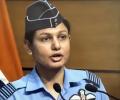
Wing Commander Vyomika Singh's role at the press briefing for Operation Sindoor is consistent with her experience as a helicopter pilot in Jammu and Kashmir during the course of her career.

'Please don't politicise the incident or play with our emotions. We were there. We know what the terrorists said. We have already shared their statements during the attack'

Congress leader Rahul Gandhi visited Poonch in Jammu and Kashmir, offering condolences to families affected by cross-border shelling and encouraging students who lost two classmates to the violence. During an hour-long visit, Gandhi met with students at the convent school that lost the twins, and visited families whose homes were damaged in the shelling.
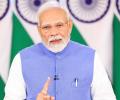
Kharge claimed that the Centre accepted "intelligence failure" in an all-party meeting and said it should be held accountable for "not reinforcing" security arrangements in Kashmir to protect people.

Mrs Gandhi's power ebbed and peaked with the times. Mr Modi's has almost been constant, barring the few months of hard dip after the 240 seats of 2024, points out Shekhar Gupta.
